
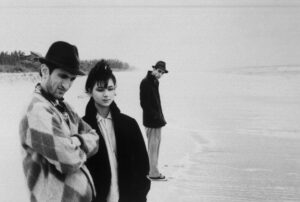
Jim Jarmusch’s breakout second feature is essential indie cinema, on a very short list of movies—alongside Eraserhead; Reservoir Dogs; sex,lies, and videotape; and just a handful more—that basically set the template for what “indie” is today.
You can trace back the cliché of recycled cultural ephemera to Paradise‘s obsession with Chesterfields and Screamin’ Jay Hawkins, as well as a whole lineage of irony-infused cinema to this tale of Brooklynites and small-time gamblers Willie and Eddie, whose unhurried lifestyle is thrown off when Willie’s Hungarian cousin Eva arrives for a 10-day visit. Eva’s presence eventually motivates the pair to shake up their rudderless routine, hit the road, and seek out the American Dream outside the confines of NYC. Starring John Lurie (of The Lounge Lizards), Richard Edson (a former Sonic Youth drummer-turned-actor), and violinist Eszter Balint, the film unfolds over a succession of long takes shot in washed-out black and white by Tom DiCillo.
Jarmusch’s latest, the anthology Father Mother Sister Brother, just won top prize at Venice this year, so it would seems that his brand of laconic cool still resonates four decades on. With Stranger than Paradise, Jarmusch’s hipster bona fides were already on full display.